
A boiler pressure dropping is rarely a completely random event. The timing, speed and conditions surrounding the loss can provide useful clues, helping you narrow down the likely culprit before booking a repair.
Most sealed central-heating systems sit at around 1 to 1.5 bar when cold. Pressure may rise towards 1.5 to 2 bar while the heating is running, but readings below 1 bar, or a gauge that repeatedly approaches 3 bar, need attention because the boiler may lock out or stop heating safely.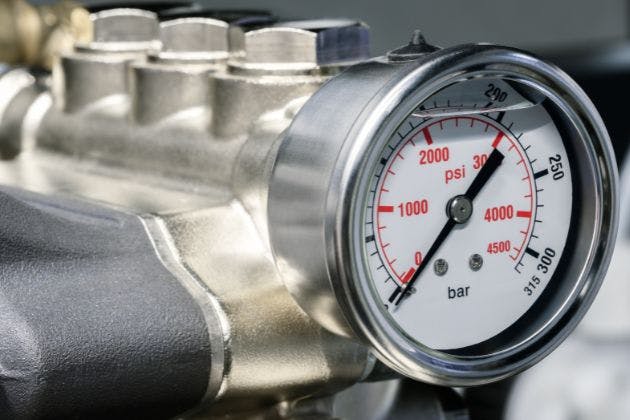
Start with the pressure pattern
Before topping up the system, note the pressure when the boiler is cold, then check it again after heating has run and the system has cooled. Also record how quickly the reading falls. This simple timeline can be more revealing than repeatedly turning the filling loop.
Only during heating: investigate expansion, temperature-related leaks or discharge.
Overnight: look for a slow leak or pressure relief discharge.
After radiator bleeding: check whether air removal has left the system under-pressurised.
Over several weeks: suspect a small, persistent leak or component fault.
Very quickly: stop and arrange professional help.
1. Pressure drops only when the heating runs
This pattern points towards a fault that appears as water heats and expands. A failing expansion vessel may not absorb the increase in pressure properly, causing the pressure relief valve, or PRV, to discharge water. Once the system cools, the gauge can be much lower.
Look at the small copper discharge pipe outside, if your boiler has one. Drip marks, staining or dampness beneath it can indicate that the PRV has been releasing water. Do not remove the boiler casing or attempt to adjust the expansion vessel yourself. The next best action is to book a qualified heating engineer to test the vessel, PRV and system pressure.
2. Pressure drops overnight
If the heating is off and the pressure falls while the house is quiet, a slow leak becomes more likely. Check visible radiator valves, pipe joints and the area beneath the boiler for dampness, corrosion or white residue. Placing a dry towel under a radiator valve can help reveal a small leak overnight.
A PRV can also discharge after the system has heated, with the evidence only becoming noticeable later. If the outside discharge pipe is wet or marked, avoid repeatedly topping up the boiler and arrange a repair, as continual fresh water can encourage corrosion inside the heating system.
3. Pressure drops after bleeding radiators
Bleeding a radiator releases trapped air, but it can also allow a small amount of system water to escape. A modest pressure reduction afterwards can be normal, particularly if several radiators were bled. However, a continuing drop suggests more than routine maintenance.
Check that each bleed screw is closed firmly, without forcing it, and inspect the radiator valves for moisture. If the pressure remains below the recommended level, the system may need carefully repressurising according to the manufacturer’s instructions. If it falls again, the filling loop should not be used as a permanent solution. An engineer should find the underlying leak.
4. Pressure drops slowly over weeks
A gradual fall over weeks often indicates a micro-leak. Water may evaporate before leaving an obvious puddle, especially around radiator valves, hidden pipework or fittings beneath floors. Green or white deposits, slight rusting and recurring damp patches are useful clues.
The filling loop may also be closed incorrectly or left in the wrong position. This usually causes confusion rather than solving the pressure loss, and an open loop can create excessive pressure and trigger the PRV. Check only what your boiler instructions identify as the filling loop, and do not dismantle it or alter internal components.
5. Pressure drops suddenly and rapidly
A sharp fall in pressure is a stronger warning sign. It may be caused by a major leak, a PRV that is discharging continuously, or an internal fault such as a damaged heat exchanger. In some systems, water can pass internally where it cannot be seen from outside the boiler.
Turn off the heating if you can do so safely, check for obvious leaks and avoid opening the casing. If water is near electrical equipment, isolate the boiler only if it is safe and practical, then contact a qualified engineer promptly. A boiler that repeatedly loses pressure within minutes should not be left running while you wait.
Safe checks and professional boundaries
You can observe the gauge, inspect accessible pipework and radiator valves, and look for discharge marks outside. You should not remove the boiler casing, work on gas components, dismantle the PRV or expansion vessel, or attempt to repair an internal heat exchanger.
Repeated pressure loss is not a normal feature of a healthy sealed heating system. Book boiler repair if the gauge keeps falling, the PRV pipe drips, you find a leak, the boiler locks out or repressurising only provides short-term relief.
Resolve the clue, not just the gauge
Pressure patterns help point an engineer towards the right tests, whether the cause is a leaking valve, expansion vessel problem, PRV discharge or an internal boiler fault. Recording when the pressure changes can save time and reduce the risk of repeated temporary fixes.
For expert help, contact Green & Reliable Heating on 08001182467 to book boiler repair. You can also arrange a boiler service to catch worn components and early pressure problems before they become an inconvenient breakdown.