
If a radiator is cold at the top but warm at the bottom, it usually means there’s trapped air inside preventing proper heat circulation. However, this isn’t always the case. Sometimes the issue could stem from poor water flow caused by valve problems or blockages within the system. Performing a quick, safe two-minute check can help you identify whether a simple radiator bleed will fix the problem or if there’s a more complex circulation issue that requires a professional engineer’s attention.
This approach saves time and avoids unnecessary work, ensuring your heating runs efficiently without delay.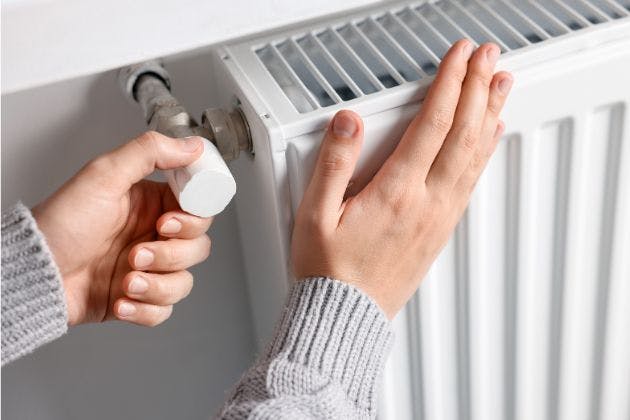
Cold at top, warm at bottom: what it usually tells you
In a healthy system, hot water flows in at one side of the radiator, rises, and pushes cooler water out. The whole panel should feel evenly warm from top to bottom after the heating has been on for a while.
If the radiator is hot at the bottom and noticeably cooler at the top, the most common cause is air trapped in the top section. Air stops hot water reaching the upper part of the panel, so it never fully heats up.
There are exceptions though. A radiator can also feel strange at the top if a valve is half closed, if the circulation is poor, or if there is sludge reducing flow in and out of the radiator.
The two‑minute diagnosis: simple checks in order
Use this quick sequence for any “radiator cold at top” issue. Work methodically and stop if anything feels unsafe or unclear.
Check valve positions
Compare with other radiators
Decide if it is safe to bleed
Top up and confirm boiler pressure
Step 1: Check the TRV and lockshield
First, make sure the radiator is actually being allowed to heat properly. On the flow side you will usually have a thermostatic radiator valve (TRV) or a simple hand wheel.
Turn the TRV or hand wheel fully open by rotating it anticlockwise. It should move smoothly and click through the numbers if it is a TRV. If it is already fully open and the radiator is still cold at the top after 20 to 30 minutes of heating, move to the other end.
The lockshield valve is usually capped and adjusted with a spanner. It controls how much water flows out of the radiator. Check it is at least part open, not fully closed. Do not force it; if it is seized, that is a job for an engineer.
Step 2: Compare with other radiators
Walk around and feel a few other radiators once the heating has been on for a while. If several radiators are cold at the top, it strongly suggests trapped air in the system, or a circulation problem at boiler or pump level.
If just one radiator is affected, and its valves are open, it is more likely to be a local air pocket or a flow balance issue on that specific radiator.
Step 3: Check boiler pressure before bleeding
Before you reach for the radiator key, look at your boiler’s pressure gauge. Most systems operate best around 1.0 to 1.5 bar when cold, but check your boiler manual for the correct range.
If your pressure is already low, close to the red zone, bleeding will let more water out and can drop it even further. In that case, do not bleed yet. Deal with the pressure problem first and investigate possible leaks.
When bleeding a radiator is safe (and when it is not)
Bleeding a radiator is normally straightforward, but it should always be done with some basic checks. Used incorrectly, it can mask a leak or leave you with a boiler that will not fire due to low pressure.
Safe bleeding method for a single radiator
Turn off the heating and allow the system to cool for at least 30 minutes so you are not dealing with very hot water. Place a cloth or small container under the bleed valve at the top corner of the radiator.
Using a radiator key, turn the bleed valve gently anticlockwise. You should hear air hiss out. Once water starts to flow steadily, close the valve by turning it clockwise until it is snug, but do not overtighten.
Afterwards, go back to the boiler gauge and check the system pressure. If it has dropped below the recommended level, you will need to top it up in line with the manufacturer’s instructions.
When bleeding is a bad idea
If your system pressure is already low, bleeding will make it worse and could leave the boiler unable to run. In that situation, topping up pressure and finding the cause comes first.
Repeatedly needing to bleed the same radiator, or frequently topping up boiler pressure, often points to a slow leak or air entering the system somewhere. That is the time to pause the DIY approach and book a heating engineer to investigate.
What your diagnosis result usually means
Use this quick reference to interpret what you have found during your two‑minute check.
Cold at top, warm at bottom, normal pressure, no other issues – likely trapped air, one‑off bleed usually helps.
Cold at top on several radiators, normal pressure – air more widely in system or circulation imbalance, engineer should review.
Cold at top, pressure already low – do not bleed, investigate pressure loss and leaks first.
Radiator barely heats at all, valves open – possible sludge or flow problem, needs professional inspection.
Need to bleed often, pressure keeps dropping – likely leak or air ingress, book a fault‑finding visit.
How air gets into your heating system
Air does not usually appear in sealed heating systems for no reason. One common cause is a small leak on a radiator, valve, or joint that lets water out and air in over time.
Recent work on the system can also introduce air. If your system has been drained down for repairs, radiator changes, or boiler work, small pockets of air can remain and gradually collect at the tops of radiators.
If the system water is not protected with the right level of inhibitor, corrosion can produce gas bubbles internally. An engineer will often check the colour and condition of the water when they bleed or drain a radiator, as dirty or sludgy water points to wider issues.
What a heating engineer will check next
If simple bleeding does not solve the “radiator cold at top” problem, or pressure keeps dropping, a professional will look deeper at the system. They will test all radiator and isolation valves to make sure they operate and are correctly set.
They may balance the system so that each radiator receives the right share of flow, particularly if you have had new radiators or a boiler fitted. They will also inspect for micro‑leaks around valves, joints, and under floorboards where possible.
In more stubborn cases, they might take a radiator off the wall to check for a build‑up of sludge, assess whether a powerflush or chemical clean is needed, and confirm the boiler and pump are circulating water properly throughout the property.
Next steps and getting expert help
If your radiator is cold at the top, the issue improved with a one‑off bleed, and your boiler pressure is stable, keep an eye on things and consider annual servicing to prevent a repeat. If pressure keeps falling, it is worth reading a dedicated guide on boiler pressure dropping so you understand the common causes and fixes; ask your engineer or heating provider for their recommended resource.
For anything that points to leaks, recurring air, or circulation problems, it is safer and usually cheaper in the long run to get a specialist involved. Green & Reliable Heating can help with thorough boiler servicing, fault finding and heating repairs. To book an appointment or discuss a persistent radiator or pressure issue, call Green & Reliable Heating on 08001182467.