
Boiler short cycling happens when your boiler fires up, runs for a short time, switches off, then starts again soon afterwards. An occasional cycle is normal, but repeated short runs can reduce efficiency, increase component wear and make it harder to maintain a comfortable, steady temperature.
The cause may be something straightforward, such as a thermostat setting or restricted circulation, but it can also point to sludge, scale, incorrect sizing or a developing fault. The checks below provide a sensible troubleshooting sequence without encouraging unsafe work on the boiler itself.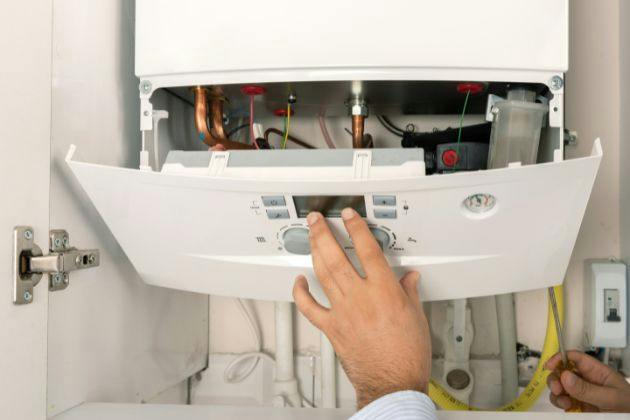
How to recognise short cycling
A heating system usually runs for long enough to warm the water circulating through the radiators before the boiler rests. With short cycling, the burner may operate for only a few minutes, repeatedly, even though the thermostat is still calling for heat.
Listen for frequent start-up and shutdown sounds, watch whether radiators remain cool despite the boiler firing, and note whether the pattern occurs during central heating, hot water production or both. These details can help an engineer narrow down the cause.
Check whether the room thermostat is still demanding heat when the boiler stops.
Note the boiler temperature when it shuts down and restarts.
Look for cold radiators, unusual pump noises or uneven heating.
Record whether the issue began after bleeding radiators or changing controls.
A troubleshooting sequence
Start with thermostat demand and settings
A thermostat positioned near a radiator, in direct sunlight or close to a draught can reach its target temperature too quickly. The boiler then stops even while other rooms are cold. Check that the thermostat has a clear airflow around it and that its schedule, temperature and cycling settings have not been changed accidentally.
Smart controls and programmable thermostats may include an anti-cycling delay or minimum run-time setting. These should be adjusted carefully and according to the manufacturer’s instructions. If the boiler cycles while the thermostat is continuously requesting heat, move on to the system checks below.
Check the boiler temperature setpoint
If the flow temperature is set very high, the boiler can reach its target quickly and shut down before the home has warmed properly. Lowering the setting slightly may help, but do not make repeated changes if you are unsure of the control or if hot water performance is affected.
Short cycling when the heating demand is very low can also be normal on a modern boiler. However, frequent cycling with cold rooms suggests that heat is not being transferred or circulated effectively.
Consider pressure, air and circulation
System pressure is only one part of the diagnosis. A pressure reading outside the manufacturer’s recommended range, air trapped after radiator bleeding, or air in the pump can all affect circulation and cause the boiler to reach its limit quickly. Homeowners can check the pressure gauge and listen for gurgling, but should not remove boiler covers or attempt to vent internal components.
Flow problems may also involve a failing pump, partially closed valves, blocked filters or a stuck zone valve. Check that accessible radiator valves are open as expected and that no recent decoration or furniture has obstructed thermostatic radiator valves. Pump, filter and valve work should be left to a qualified heating engineer.
Look for sludge, scale and poor heat transfer
Sludge can build up in older central heating systems, restricting radiator flow and creating cold areas. This can make the boiler heat its water rapidly while the radiators receive too little heat. A chemical clean or power flush may be considered after proper testing, rather than used as a blanket solution.
Scale inside the heat exchanger can have a similar effect, particularly in hard-water areas or where the boiler mainly cycles during hot water production. An engineer can assess temperature differences, flow rates and heat exchanger condition before recommending cleaning or replacement.
Symptoms and likely causes
Cycles on hot water only: likely causes include a scaled heat exchanger, restricted hot water flow, a faulty diverter valve or a hot water control issue.
Cycles when heating demand is low: the boiler may be reaching its minimum output, especially in a well-insulated home or where too many radiators are turned down. Control settings, system balance and boiler sizing should be assessed.
Cycles after radiator bleeding: air may have entered the system, pressure may have changed, or circulation may now be uneven. Check the gauge and listen for air, then arrange an inspection if the pattern continues.
Cycles with cold radiators: restricted flow, closed valves, pump problems, sludge or air are possible. Do not assume the boiler itself is defective until circulation has been checked.
Boiler size and professional diagnosis
An oversized boiler can produce more heat than the property needs, causing it to reach its target temperature rapidly and cycle repeatedly. This may happen after insulation, window or heating improvements reduce the home’s heat loss. A heat-loss calculation can show whether the boiler output is suitable, rather than relying on guesswork.
Call an engineer if the boiler locks out, displays a fault code, makes banging or vibrating noises, leaks, smells of gas, or continues short cycling after basic control checks. Turn the appliance off and contact a Gas Safe registered engineer immediately if you smell gas or suspect a carbon monoxide issue. Never remove the boiler casing or work on gas components yourself.
Preventing repeated short cycling
Good commissioning, correct system balancing and properly configured controls can reduce unnecessary cycling from the start. During servicing, an engineer can check combustion, sensors, pump operation, flow temperatures and the condition of filters and the heat exchanger.
Using suitable inhibitor and maintaining clean system water helps protect circulation and internal components. Periodic servicing also provides an opportunity to identify scaling, sludge or control problems before they affect comfort. If your boiler is old or poorly matched to your home, a central heating upgrade may improve control and efficiency.
For reliable diagnosis, contact Green & Reliable Heating on 08001182467 to book a diagnostic visit. You can also arrange boiler repair and servicing to investigate the cause and restore steadier, more efficient heating.