
If you’ve noticed your boiler leaking water, it’s natural to feel concerned, especially during colder months when you rely on your heating the most. The most important thing is to prioritise safety, avoid touching any electrical components or wet areas that could pose a risk. By carrying out a few straightforward checks, you can protect your home from further damage and gather useful information that will help your heating engineer identify and fix the problem quickly and efficiently.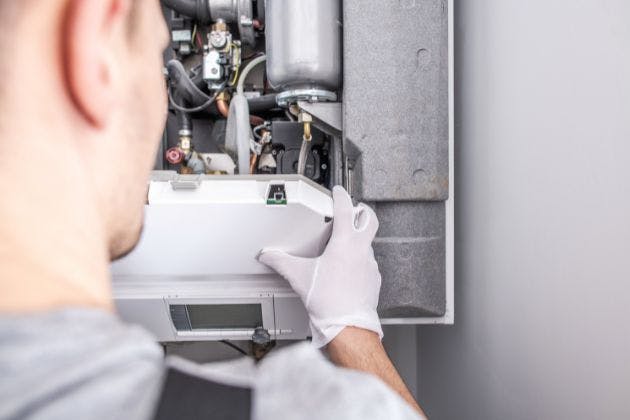
Immediate safety steps when a boiler is leaking
Before you look closely at the boiler, take a moment to assess the area around it. If there is any chance that water has reached electrical sockets, controls or cables, do not touch them.
If you can safely reach your consumer unit or main isolation switch without crossing wet flooring, turn off the power to the boiler circuit or, if you are unsure which one it is, the whole house supply. Never step in water to reach electrics.
Many modern boilers also have a small braided metal hose called a filling loop. If you can see valves on this loop and it appears to be open, turn them so they are closed. This can help stop fresh water from being added to the system while you wait for an engineer.
Keep children and pets away from the leak area
Put a tray or towel down to catch drips, if safe to do so
Do not remove boiler covers or panels yourself
Do not reset the boiler repeatedly if water is present
Simple checks to judge how serious the leak is
You do not need to diagnose the fault yourself, but having a rough idea of how severe the leak is can guide how urgent your call for help should be. Look at the leak for a minute or two and take note of what you see.
A very slow, occasional drip with no visible spray is usually less urgent than a steady flow or water pooling quickly on the floor. If you are constantly mopping up, treat it as an urgent repair and turn off the boiler at the controls.
Quick severity checklist
You can use this simple checklist to describe the situation when you call an engineer:
Drip or flow: Is it a drip every few seconds, or a continuous trickle/stream?
Pooling: Is water forming puddles or spreading beyond a small tray or towel?
Pressure gauge: Is the boiler pressure dropping rapidly, staying stable, or rising?
Corrosion: Do you see rust, green staining, or crusty deposits around joints and valves?
Sudden large leaks, rapidly falling pressure, or signs of heavy corrosion all point towards getting a professional out as soon as possible. If at any point you feel unsure about safety, switch the boiler off and call an engineer straight away.
Common causes of a boiler leaking water
Many leaks come from fairly small components, but they still need a trained engineer to repair them properly. Understanding the likely causes can make the situation feel less mysterious and help you explain what you see.
Worn seals and joints: Over time, rubber seals and fibre washers inside your boiler can harden or crack. This often leads to a steady drip from a particular connection, especially when the system heats up and cools down.
Pressure relief discharge: If your boiler pressure rises too high, a safety valve can release water through a copper or plastic discharge pipe. Occasional discharge may point to a pressure problem rather than a broken pipe inside the boiler.
Corroded metal components: Slight weeps over a long period can cause rust and thinning of metal. Eventually, this may produce a more obvious leak, often alongside staining or flaky deposits around the affected part.
Condensation and condensate pipe issues: Modern condensing boilers produce condensation that leaves through a small plastic condensate pipe. If this pipe is blocked or damaged, water may drip from the boiler casing or nearby joints.
Nearby pipework leaks: Sometimes the leak is not from the boiler itself but from pipes or valves directly below or beside it. Water can travel along surfaces, so it may appear that the boiler is leaking when the source is a nearby joint.
Working out roughly where the leak is coming from
You should never remove the boiler casing or tamper with internal parts. However, a simple visual check from the outside can give useful clues without putting you at risk.
If you can safely get close, look at three areas: the boiler body, the pipe connections beneath, and any external discharge or condensate pipes that lead away from the appliance. Take photos from different angles if you can do so without standing in water.
Leak from the boiler casing
If you see water beading on or running down the boiler front or sides, it may be coming from inside the casing. Often it appears around seams or from the bottom edge of the case.
This can point to internal component issues, such as the heat exchanger, internal pipework, or condensate traps. In this situation, turn the boiler off and arrange a repair visit as soon as possible.
Leak from pipe connections underneath
If the casing looks dry but the drips appear around the pipes below the boiler, the issue could be with a joint or valve. You might see water collecting on a specific nut or section of pipe.
These leaks can be related to system pressure, corrosion, or previous work on the pipework. Take a close photo of the exact pipe or valve that looks wet and note whether the pressure gauge is moving up or down.
Leak from an external discharge or condensate pipe
Many boilers have a discharge pipe exiting the wall, often copper, and a condensate pipe, usually plastic and sometimes white or grey. If water is dripping outside from one of these, try to see whether it happens only when the boiler is running or all the time.
Constant discharge can suggest a pressure or safety valve issue, while intermittent dripping could relate to normal condensate flow that has been affected by a blockage or freezing. Either way, mention exactly which pipe is dripping when you speak to an engineer.
What information to gather before calling an engineer
Spending five minutes gathering the right details can make your call with an engineer much more efficient. It also helps them arrive better prepared with the correct parts and tools.
First, take clear photos or a short video of the leak area, including a wider shot that shows the boiler and surrounding pipework. Next, note down when the leak happens: all the time, only when the heating is on, or only when you run hot water.
Check the boiler pressure gauge, if you have one, and write down the reading when the system is cold and again when it has been running. If there are any fault or error codes on the display, take a picture or copy them carefully.
Finally, note the boiler make and model from the front panel or user manual. Having these details ready when you call means the engineer can give more accurate advice and may be able to bring specific spares to your appointment.
Next steps and arranging professional help
A leaking boiler is rarely something to ignore, even if it is only a slow drip. Water can gradually damage components, electrics and nearby fixtures, as well as reduce the efficiency and reliability of your heating system.
Once you have taken basic safety steps and gathered information, the safest option is to book a qualified engineer to inspect and repair the fault. If you are in York, Richmond, Harrogate or the surrounding areas, Green & Reliable Heating can provide a prompt, professional boiler repair service.
You can learn more about their services on their York boiler repair page, as well as their specialist oil boiler repair and oil boiler service information. When you are ready to arrange a visit or need advice on a boiler leaking water, call Green & Reliable Heating on 08001182467.