
If your boiler pressure keeps dropping, it can be worrying, especially during colder months when you rely on your heating most. The good news is that a falling pressure gauge often points to common issues you can check yourself quickly. In many cases, you can take simple steps to stop the pressure from dropping further and avoid damage while waiting for an engineer.
Understanding what causes pressure loss and how to respond can help keep your boiler running safely and efficiently.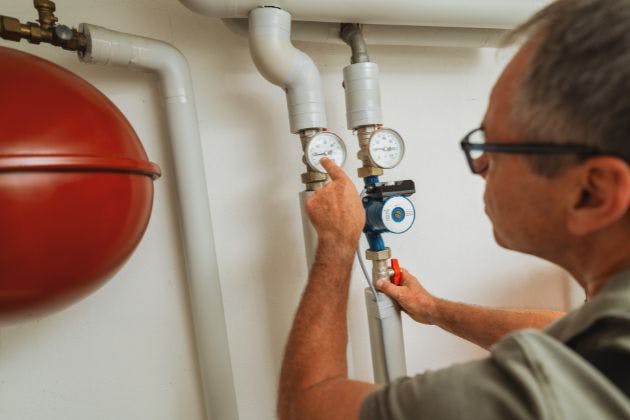
Normal boiler pressure and safety first
Most modern combi and system boilers have a normal operating pressure range printed in the user manual or on the boiler casing. It is usually shown on a dial or digital display with coloured zones to guide you.
Check your manual for the recommended range and never rely on guesswork. If the pressure is dropping into the lowest zone, or the boiler keeps locking out or showing fault codes, turn the heating and hot water off at the controls and let the system cool completely.
Stop using the boiler immediately and call an engineer if you notice water dripping from the boiler casing, a strong smell of gas, burning smells, or any exposed or damaged pipework around the boiler.
Quick checks you can do safely
Before you touch anything, switch the boiler off at the controls and, if needed, the fused spur, then allow it to cool. You are not expected to open the boiler case; that is for qualified engineers only.
Use this simple checklist to look for obvious issues around your home without taking anything apart.
Walk around and check all radiators, valves and visible pipes for damp patches or drips
Look under the boiler for any signs of water on the floor, skirting or worktop
Place a dry towel or tray under the pipework you suspect may be leaking and recheck later
Find the copper discharge pipe outside (often near the boiler) and check for constant dripping
Make a note of the pressure reading before and after the heating has been on
If you see active leaks, turn the heating off and avoid topping the pressure up repeatedly, as this can force more water out and may cause further damage.
Common causes of boiler pressure loss
Leaks on radiators, valves or visible pipework
One of the most frequent reasons for dropping boiler pressure is a small leak somewhere on the heating circuit. This might be at a radiator valve, a joint on copper pipework, or where pipes pass through walls or floors.
Typical signs include staining on walls or ceilings, rusty marks on or under radiators, or a slow drip at a valve when the heating is on. Even a tiny leak that only appears when the system is hot can empty enough water over time to lower the pressure.
If you spot a leaking valve or joint, place a tray or towel underneath and gently turn the radiator valve to the off position. Do not attempt to tighten compression joints when the system hot, as this can make the leak worse. An engineer can drain down and repair or replace the faulty part safely.
Pressure relief valve and discharge pipe issues
Your boiler has a safety component called a pressure relief valve. It protects the system by releasing water through a discharge pipe if the pressure gets too high.
If this valve is faulty or has recently activated, it can stick slightly open and let water escape even at normal pressures. You may notice a constant or regular drip from a copper pipe outside or near the boiler, especially after the heating has been on.
Do not cap or block this pipe, and do not attempt to adjust the relief valve yourself. The correct fix usually involves testing and possibly replacing the valve, which must be done by a Gas Safe registered engineer.
Expansion vessel problems
The expansion vessel absorbs the natural expansion of water as it heats up so your pressure does not swing wildly. When the vessel loses its air charge or fails, pressure can rise too high when the heating is on and then drop too low when it cools.
Typical clues include the pressure gauge rising quickly as the heating starts, then falling below normal once everything cools down. The relief valve may also discharge water more often because the system cannot absorb the extra volume.
Recharging or replacing an expansion vessel involves specialist gauges and safe isolation of the boiler. This is not a DIY task and should always be left to a qualified engineer.
Recent bleeding of radiators or topping up
If you have recently bled your radiators to release trapped air, the system will often need topping up afterwards. If this was not done correctly, or if there is still air in the system, the pressure may continue to drop for a short while.
After bleeding, check the gauge once the system is cold and, following your boiler manual, top up to the recommended level using the filling loop if you are confident and it is safe to do so. Avoid topping up when the system is hot, as the reading will not be accurate.
If the pressure keeps falling every time after you top up, that points to an underlying leak or component issue that needs professional attention.
Filling loop left open
On many boilers, there is a filling loop that lets you add water from the mains into the heating system. This is usually a silver flexible hose or fixed valve arrangement with one or two small taps or levers.
If the filling loop has been left slightly open after topping up, it can cause both rising pressure when heating is on and later pressure drops if the relief valve has been venting excess water. In some cases, it can also slowly introduce fresh air, leading to airlocks and corrosion.
With the boiler cool, visually check the filling loop. The taps or levers should be fully closed and aligned with their off position, as shown in the manual. If you are unsure, do not touch them; instead, an engineer can confirm the correct setting and remove the loop if required.
Pressure drop patterns and what they suggest
Noticing when the pressure drops can help narrow down the likely cause before the engineer arrives. Keep a simple note of the gauge reading at different times of day.
Pressure drops only when heating is on
If the gauge rises at first then suddenly drops or the boiler cuts out while heating, it may point towards an expansion vessel issue or a safety valve repeatedly discharging water. You might also have leaks that only appear when pipes expand with heat.
In this situation, turn the heating off and avoid repeatedly topping the system up. Note any dripping from the discharge pipe or radiators, then arrange a visit from a heating engineer.
Pressure drops overnight or when the system is off
A slow pressure loss when everything is off often suggests a small leak somewhere in the circuit. The leak might be under a floor or in a loft where it is harder to spot.
Walk around rooms and feel carpets or flooring edges near radiators, and look for new stains on ceilings below pipe runs. An engineer can carry out further checks, including pressure tests, to find hidden leaks safely.
Pressure drops soon after topping up
If the gauge looks fine straight after you top up, but within hours it is back in the low zone, there is almost certainly a genuine water loss rather than just trapped air. This may be through a leak, the relief valve, or the boiler itself.
Repeatedly topping up is not a long-term solution and can damage the boiler and system. Make a note of how quickly the pressure falls and call an engineer rather than continuing to add more water.
Tasks for homeowners vs tasks for engineers
What you can check safely
As a homeowner, you can safely carry out visual checks, mop up any minor drips, and protect your property from water damage. You can also consult your boiler manual for guidance on reading the pressure gauge and, if you are confident, topping up using the filling loop when the boiler is cold.
Stop and seek professional help if anything looks damaged, you are unsure about valves or settings, or the boiler shows repeated fault codes. Never remove the boiler case, interfere with gas components, or isolate safety devices.
What needs an engineer
The following jobs must be done by a qualified heating engineer: tracing and repairing leaks within the boiler casing, replacing pressure relief valves, recharging or replacing expansion vessels, fixing internal sensors, and investigating repeated pressure loss with no obvious external leak.
A professional will also check that your system inhibitor levels are correct, that your filling loop is correctly installed, and that all safety devices are working as designed. This keeps your boiler both efficient and safe for everyday use.
Next steps if your boiler pressure keeps dropping
If your boiler pressure will not stay in the normal range, or you have found signs of leaks or a dripping discharge pipe, it is time to bring in an expert. Leaving it can lead to bigger problems and may shorten the life of your boiler.
Green & Reliable Heating can help diagnose and repair pressure issues on combi and system boilers, as well as carry out routine servicing to reduce the risk of future problems. If you are in York, you can book a boiler repair through our York boiler repair page, or arrange ongoing care via our boiler repair and boiler service pages.
For friendly, professional advice or to book a visit, call Green & Reliable Heating on 08001182467. If your system looks unsafe or the pressure keeps falling fast, switch the boiler off and get in touch as soon as you can.